With COVID 19 continuing to affect our everyday lives, digital marketing has never been more important to businesses than now. Businesses that didn’t have a digital presence of any kind are the ones losing the most during this pandemic.
It is obvious now that there is no way to go but take your business online.
It is important to invest in online marketing efforts to promote and grow your business. Most of your customers are online. Those who are not will hear about you from those who are online (social media is a good driver of word of mouth referral).
Now without further ado, we have gathered six ways you can give your business online presence. Let’s dive in.
Through Social Media
This is the most preferred option. Social media is a good driver of word of mouth marketing. It helps you to connect with customers and build relationships. It only takes a few minutes to set up a profile for your business online.
Most social media platforms such as Facebook and LinkedIn have features to create company profiles. It is important to note that social media channels vary in terms of content type and users. This will help you with planning a social media marketing strategy for your business.
A good social media profile must include relevant keywords and hashtags as well as a Call to Action.
Google My Business (and other listing directories)
Google My Business is an ideal tool for local businesses. It is a free tool that allows your business to be listed on maps and create a profile. Google will show your business to people searching for services related to yours. For maximum visibility, make sure to encourage your customers to leave reviews on your profile.
There are also plenty of other local and international directories offering business listings. It is easy to find them in your location. For example, try to search a key phrase related to your business or any business and pay attention to search results. Youll see websites with a list of companies offering such kind of service.
Create a website
This is the most obvious way to take your business online. It acts as your digital home or office where customers can visit and learn more about you. Creating a website is not that hard, thanks to free information. But the hard part is making it an effective marketing tool that brings leads to and converts visitors into subscribers or buying customers.
And the good thing is that creating a website is cheap these days. You can even do it on yourself through the help of free tutorials online. But if you too busy to create a website by yourself, we can help you create a corporate website that’s fully SEO optimized. Click here to get started.
Online classifieds platforms
These are platforms that connect sellers and buyers. You can use these platforms to post classifieds advertisements for your product and drive sales. One advantage of these platforms is that they already have an audience of people visiting to look for something to buy. In Tanzania, Kupatana and Zoom Tanzania are good examples.
Using influencers
These are people with big followers on social media. They can help you reach an audience of their followers. For this to work, your business must be online first so that an influencer can direct people to you by tagging, mentioning, or sharing a link.
Through Email
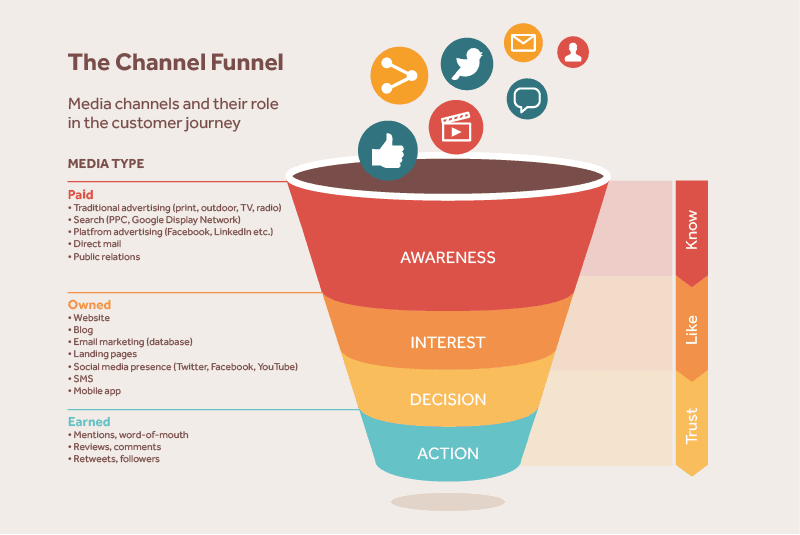
Emails marketing is good for building trust and brand loyalty and the good thing is that everyone has an email account. To do this, you need to collect email contacts of your customers (such as through signup forms)so you can engage them through newsletters or other important updates such as new products and offers.
Taking your business online is easier. However, getting awareness and recognition takes time. You need to learn the best practices of navigating different digital communication channels to grow your business.
One quick method for you to get noticed is to use paid advertisements through Facebook Ads or Google Ads. This is a quick way to jump in front of your customers in minutes!
Social media has become an important part of our everyday life. Worldwide, there are 3.80 billion social media users.
In Tanzanian, a large number of youths are avid users of these social platforms such Instagram, Facebook and YouTube. We use these tools to stay connected and informed. But most of us tend to be so well informed about issues surrounding our celebrities.
We are active on social media, and that’s not always a bad thing. But are we making the most of it?
You have probably heard about people who have won scholarships, competitions, deals, got job and all these exciting opportunities after seeing them from social media, and you were left asking, ‘which Instagram are these winners using?’ Well, they get information about opportunities the same way you get information about Diamond Platnumz divorcing Tanasha.
If you don’t want to miss out on important opportunities, or want to do more with social media, here is how you can benefit from these platforms, the same ones that winners are using:
Join groups or conversations that resonate with you
Don’t be up to date with everything. That’s draining. Be well informed about issues that really matter to you. Be it social change, world issues, sports or anything else. You need to have an information diet, you can’t take anything in. Focus and engage on content that resonate with you only. Celebrity dramas is entertaining but time wasting.
Find your tribe and connect with them
Follow people who do things you love doing. If you’re a digital marketer, find and connect with people in the digital marketing industry. You can also have virtual mentors on social media who inspire you and give you lessons through their posts. because all these people who live our dream lives, post about it. Why not learn and be mentored?
Endelea kufanya mzaha na mitandao ya kijamii. Fanya tu mzaha. Endelea, na umri unakwenda hivyo. Hii mitandao kuna watu imewasaidia kupata kazi, imewachangia ada, imewasaidia matibabu, misiba, biashara, wapenzi, n.k. Sasa wewe endelea na mzaha kila dakika labda ni fungu lako.
I used to hate this word, because I believe people are not brands. But again, your social media persona should just be you. Don’t fake things because people will notice. Understand who you aspire to become and try your level best to stay out of trouble on social media.
Follow accounts that post opportunities
There are a lot of accounts and blogs that share opportunities and organizations that do things that you like. In 2018, I went to Malawi to work with When the Saints, an organization that works with girls who have been sexually abused. I got into contact with them after just I read about them from my favourite blog. I reached out to the founder and I got the opportunity to work with the organization for for three months.
Use your account to share your passion
I love blogging, and my Instagram is full of pictures and long captions (inspiring people and sharing tips), my Twitter is full of me connecting with other bloggers in the word. You love photography, share what you capture on your account, sell what you make, share your love for things etc. You might gain a following and might as well become an influencer. People pay bills using their social media accounts these days, why not you?
And those are the ways I think we can benefit from these digital platforms.
-Eunice💜
Eunice is a writer at abiblegirl.com, where she shares life tips for millennials. Connect with her on Instagram.
In this day and age, digital tools and skills have proved to have the power to generate revenue, and companies want to harness that power and stay ahead of their competitors.
Companies are now abandoning traditional marketing methods and invest millions of money into online marketing and digital branding.
These are the top 5 highest paying jobs in digital marketing industry so far.
Digital Project Management/Planning
Salary in US ranges between $78,750 to $118,000 while In UK it is from £60,000 to and £80,000.
Job Roles: Digital project managers are essential for overseeing the implementation of a variety of digital campaigns and strategies. Main duties often include establishing and documenting goals and objectives, creating comprehensive project plans, setting timelines and project milestones, and allocating/managing budgets.
Content Strategist
Salary in the US ranges between $1,250 to $115,000. In the UK it’s from £70,000
Job Roles: Developing and managing a complete content strategy that is tailored to a company’s digital strategy objectives, as well as the needs and preferences of their target audience. Being able to conduct content audits, create style guides, populate editorial calendars, and where, required, either create or curate relevant, high-quality content.
E-commerce Specialist
Salary in the UK is between £350,000 to £70,000. In US it’s from $90,000 to $126,000
Job Roles: To optimize product pages, from creating compelling descriptions to the perfect placement of buttons and CTAs with the goal of increasing conversions. Ability to using analytics and heat mapping tools to identify patterns in website user behavior and make changes accordingly.
Digital Media Manager
Salary in the UK is between £41,00 to £70,000. In the US it’s from $70,000.
Job Roles: Digital Media Managers are responsible for delivering multi-channel marketing campaigns and defining a brand’s digital strategy and messaging, with the intention of driving awareness, consideration and adoption of your organization’s product/service offerings. There’s often a strong focus on paid media channels, including social, display, programmatic and retargeting channels. A Digital Media Manager’s key objectives include driving online sales (sometimes in collaboration with e-commerce specialists), delivering revenue and developing new commercial opportunities through strategic management and optimization.
Brand Media Manager
Salary in the UK ranges between £40,000 to £53,000. In the US it’s from $66,000 to $98,000.
Job Roles: Brand marketing involves having a detailed understanding of a variety of content formats (both visual and written) and distribution methods and being able to utilize them in order to increase engagement, create brand advocates and encourage repeat sales. As a brand marketing specialist, you will be able to produce tight creative briefs in line with your brand goals when engaging external stakeholders.
In countries like Tanzania where Digital Marketing is still growing, an individual with a digital marketing role in a company may cover all of the roles above and even more. Even salary standards are not yet known.
There are many ways to take your business online. It can be through email, social media, local business listings, mobile apps or through other people’s websites.
But if you want to give your brand serious attention, having your own business website is highly recommended.
A website is your office on the internet where potential customers can visit and learn more about you. It is not much different from the way you can rent a frame for your beauty salon at Kariakoo. The only difference is that your salon in Kariakoo is physical but a website is not. It is hosted on a server. We will talk more about what are websites and how they work on our next posts.
So why is a website important to you?
Whether you are looking to promote yourself as a brand or to sell products and services, a website can do all that. Most people use the internet to search for services or products. By having a website for your business, you stand great chances of being found by potential customers who are already looking for service or a product like yours.
A website blends in with other marketing platforms
Nearly all social media platforms have space for you to add a link to your website. This is because social media bios don’t have enough space for you to display everything about your business. A website gives you enough space to showcase your company’s mission and vision statement, your team, long-form content, FAQs, customer’s testimony and portfolio of your works. This information can not be easily displayed on social media.
It acts as your office
If you can’t afford paying for office rent, a website can be your office and everything can work perfectly well. For example, you can have your products at home and open an online store where people can buy and you deliver to them. With your website, potential customers can visit you online and get to learn more about you and even make purchases. The same as someone would visit you in a physical place.
It gives you credibility
Brands with a website tend to win more trust than those without. A website includes legal documentation such as privacy policy, cookie policy as well as terms and conditions. With features like a blog, you can showcase your expertise in your industry just like we are doing here. We use our blog section to create actionable content about digital marketing that in the long run will establish us as professionals and thought leaders in the industry.
Everyone expects you to have it
It is crazy not to have a website for your business, especially in the digital world we live in. Your prospects are accustomed to visiting their favorite brand’s websites. Why shouldn’t they expect the same from you? You need a website because it is a modern thing to do and everyone expects you to have it.
It is cost-effective
It is cheaper to have a website than printing hundreds of brochures that have no real-time engagement and cannot convert customers easily. Even worse, they can end up being tossed in trash. You can also use networking events to encourage people to visit your website or use a small amount of money to run sponsored ads that bring customers to your website.
It offers a 24/7 Customer service and accessibility
A website is a great way to stay connected with your customers. Unlike physical offices where you have to close at certain times, a website is live twenty-four-seven to serve your visitors. With the rise of Artificial Intelligence, you can use automation tools like chatbots to engage and strengthen relationships with your customers.
A chance to appear on Google Search Results
People are always searching on google. They for various things like clothes, health issues, locations, restaurants, food and more. With organic reach increasingly declining on platforms like Facebook, Search is a great opportunity for your business to appear in front of countless customers who are searching for a service like yours.
You still don’t have a website in 2020? We can help you get one at the price you can manage. Check our website service page to book now.
We live in a digital world. Any business which is not online yet is probably digging its own grave. A serious business that plans to stay in the game for a long time must have a digital presence of some kind.
In Tanzania, recent data shows over 26 million people are using the internet which is about 46 percent of the country’s population. This is a very big number to ignore. If you are a business, you have no other option than to go digital.
Launching your business online, however, takes more than launching your websites, apps, or opening social media accounts, it involves having a deep understanding of your target audience.
In this article, we are taking you into the mind of your consumers. Understanding the psychology of your customers will help you align your online strategies to best suit their needs.
But first, let’s explain what Online Costumer Behavior means:
Online customer behavior is a type of behavior that is exhibited by customers while browsing websites or mobile apps in order to search, select and purchase goods and services, or interact with online content in order to fulfill their needs and wants.
Online customer behavior is sometimes referred to as online buying behavior or online shopping behavior.
The easiest way to understand Online consumer behavior is to think of your own behavior when you are interacting with websites or apps. What makes you like or dislike a website? What makes you open certain emails and ignore others? Why do you watch some videos up to the end and can’t finish watching others?
Think like a customer and ask yourself: What would YOU personally engage with?
Our team has been online long enough to be able to understand and analyze online customer behaviors that can affect your business performance. Here are the top 5 we think you must pay attention to.
Your customers are in a hurry
Whatever it is that you want to tell them, tell them fast before they leave. The modern world has expanded our range of choices. As a result, we have developed an increasingly short attention span, especially when what we are looking for is delayed or boring. Don’t waste your customer’s time with too many unnecessary words. A slow loading website is even worse. Time is of the essence! Whether it is a web page content or a social media caption, make it short and direct. If it is a video, make sure it is very short and interesting. Ensure easy navigation within your app or your website.
They are multitaskers and distracted
Our gadgets have made everyone a multitasking pro and distracted at the same time. Your customers arriving at your online store are constantly being bombarded with emails, texts from messaging apps and other subscriptions. You need to have strong attention grabbers. Things like Offers, download resources, a chat icon at the bottom side of your website. These are guaranteed to capture the attention of your visitors.
They respond to CTAs
A strong and clear call-to-action can get someone to engage on your website even when they were in a hurry. Don’t make your website looks like a static brochure filled with About Us and What We Do information, be sure to include a clear call to action. The most common CTAs include; Buy Now, Click Here, Subscribe to our newsletter, Get Started, Get Offer, and more. The CTAs will make visitors engage with your online store for a bit longer and perhaps leave their contacts for you to send them follow-ups later.
They are self-centered
Let us be honest, we are all selfish in nature. Your customers are looking for what fulfills their needs and wants. Your product or service descriptions should talk to your customer’s experience. Don’t make it all about yourself and how great your service is (we all hate to be sold at). Instead, make it all about your customers by answering their questions about that particular product or service. use You and Your more often than you use We and Our. Avoid direct self-promotion.
They are less forgiving
It takes time to grow a company’s reputation, but with the rise of online conversations, it only takes a minute for a company’s reputation to suffer.Your customers are smart and empowered with freedom of speech on social media.The last thing you want is being crucified by social media users for lying to them. Be authentic, don’t lie. People are less forgiving online than in real life. Read our Ultimate Guide to Social Media Marketing for Your Business [15 Tips]
How can you measure online consumer behavior?
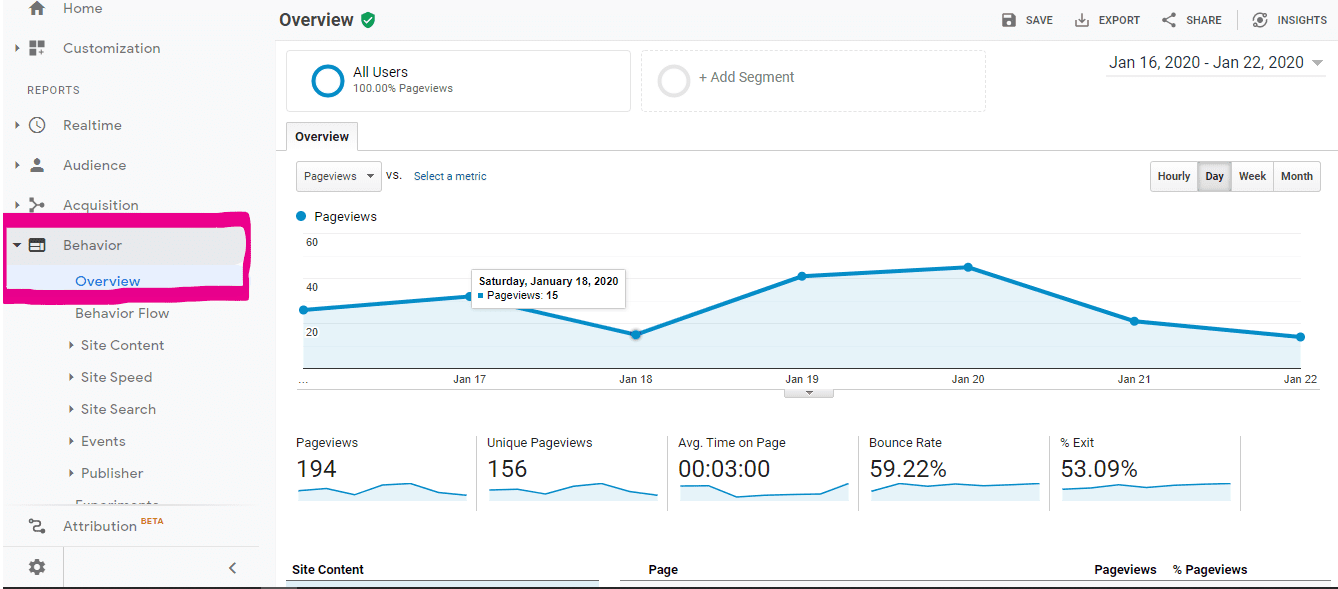
With tools like Google Analytics, you don’t need to wait for people to inform you about what is working or what isn’t on our online store, on your app or on your social media channels. Google Analytics will tell you exactly what people do when they visit your website, what time do they take, which pages they view and to what CTAs they respond to.
Google Analytics page showing an overview of website visitors’ behavior.
One of the key metrics to watch on Google analytics includes Bounce Rate, Pageview, Average Session Duration and a number of sessions. Also on YouTube, you can look at whether people are watching your video to the end or not. This information will help you make data-informed decisions to align your online marketing efforts with your consumers’ needs.
People are spending much time searching for services and products related to your business. If they are not spending time on your website, they are spending on another one’s site which offers what they need. It is time to optimize your site and tailor content that resonates with your target audience.
Originally written in 2019. Updated with reflections from 2025.
On November 27, 2019, Jumia announced it would cease operations in Tanzania. Africa’s e-commerce giant pulled out from a market of 23 million internet users, citing a need to focus on countries where they could bring “the best value.”
At the time, Business Insider reported heavy losses across the group, and Tanzania wasn’t alone — Cameroon was also shut down.
The big question then was: Does this prove Tanzania is too difficult for digital business? Or was Jumia’s model simply flawed?
Back in 2019, we concluded: both.
Tanzania had the users but not yet the digital habits. Many were still climbing the ladder of online literacy — confusing “Sign In” with “Sign Up,” uneasy with filling forms, wary of online payments. The cultural pull of face-to-face shopping was (and still is) strong.
But Jumia also failed to humanize its brand. The platform’s local presence felt transactional, not relational. The Instagram feed was full of promotions, not people. Few customer testimonials, no vendor stories, no cultural touchpoints. Trust — the real currency of e-commerce in Africa — was missing.
We wrote then: The rule of thumb for 2020 is not about advertising and branding, it’s about building great customer experience.
Five years later, the point holds — but the lens is sharper.
What We’ve Learned Since
Jumia’s retreat fits into a wider pattern. Well before 2019, foreign supermarkets like Uchumi, Shoprite, and Game also exited Tanzania. The reasons sound familiar: low purchasing power, weak middle-class base, store locations that didn’t match commuter flows, and a lack of cultural resonance. Local supermarkets like Shoppers Plaza and Shrijees thrived because they knew how to blend convenience, local sourcing, and familiarity.
The parallel with e-commerce is striking. Just as shoppers stuck to neighborhood dukas instead of malls, digital buyers in Tanzania often prefer WhatsApp sellers, informal Facebook pages, or direct calls over polished apps. The trusted middle layer — the boda guy, the family shop, the WhatsApp vendor — still mediates commerce.
Foreign entrants who succeed here do three things differently:
Localize, don’t transplant. They adapt business models to local payment behaviors, delivery realities, and cultural trust gaps.
Blend offline with online. Digital isn’t a replacement channel; it’s an amplifier of existing buying habits.
Tell human stories. In markets where trust is scarce, stories carry more weight than discount codes.
The Deeper Lesson
Looking back, Jumia’s failure wasn’t just about digital literacy or unit economics. It was about market fit. Success in East Africa isn’t about scaling fast with imported playbooks. It’s about embedding yourself in local culture, supply chains, and consumer psychology.
That’s what Uchumi, Shoprite, and Jumia misread — and what local players keep proving true.
For any business eyeing Tanzania today, the question isn’t “How big is the internet penetration?” It’s: Do you understand the trust dynamics, buying patterns, and cultural rhythms of this market well enough to design for it?
That’s the enduring insight from Jumia’s exit. And it’s why businesses entering East Africa need more than market data. They need local strategy, cultural literacy, and go-to-market creativity rooted in reality.


![Give Your Business Extra Confidence With a Website [7 Reasons Why You Need It]](https://www.tanzlite.com/wp-content/uploads/2020/02/reasons-why-you-need-a-business-website.jpg)